

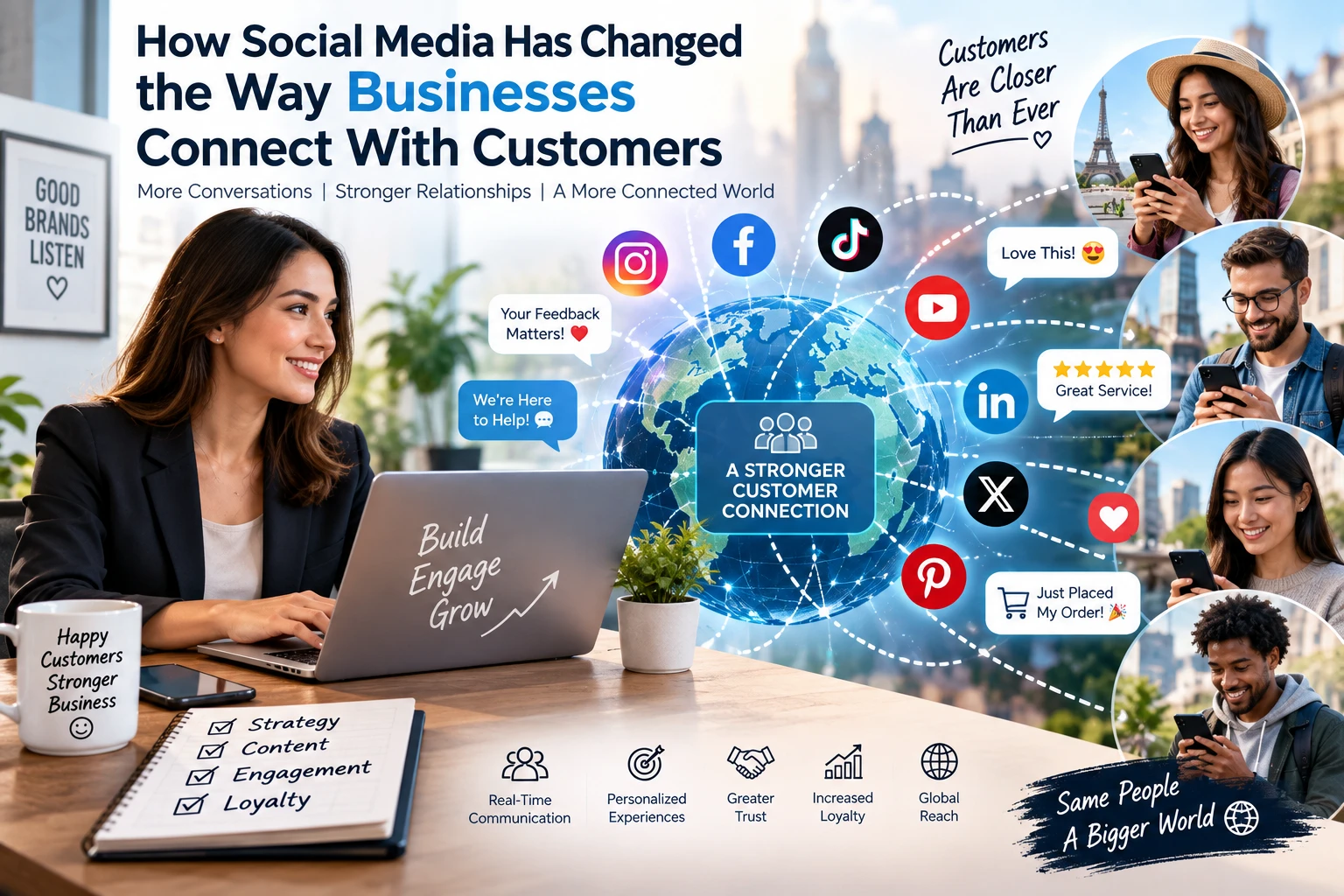
Social media has transformed the relationship between businesses and their customers. In the past, companies largely depended on traditional advertising, phone calls, emails, and face-to-face interactions to communicate with their audiences. Today, platforms such as social networks, video-sharing services, and messaging channels allow businesses to communicate with customers almost instantly. This shift has changed not only how companies promote their products and services but also how they build trust, respond to feedback, and maintain long-term relationships.
Makes Communication More Direct
Social media has made communication between businesses and customers more immediate. Instead of waiting for a response through traditional channels, customers can often send a message, comment on a post, or ask a question directly through a company’s social profile.
Businesses can respond publicly or privately, depending on the situation. Quick communication can make customers feel heard and can help companies address questions before they become larger concerns.
Helps Businesses Reach Larger Audiences
A company no longer needs to rely entirely on traditional advertising to introduce itself to potential customers. Social media allows businesses of different sizes to reach audiences beyond their local communities.
A small business can share photos, videos, educational content, or customer stories and potentially reach people in different cities or countries. This creates opportunities for businesses that may previously have had limited access to large audiences.
Encourages Two-Way Conversations
Traditional advertising generally communicates information from a company to consumers. Social media has made communication more interactive.
Customers can react to posts, share opinions, ask questions, participate in polls, and discuss products with other users. Businesses can use these conversations to better understand customer interests and concerns.
This two-way communication can also make a brand feel more approachable because customers can see the people and ideas behind the business.
Builds Brand Personality
Social media gives businesses opportunities to show their personality rather than simply presenting products or services. Companies can share behind-the-scenes content, employee stories, educational information, celebrations, and community activities.
A consistent and genuine online presence can help customers understand what a business represents. This can be particularly valuable in competitive markets where several companies offer similar products.
Provides Faster Customer Service
Customer service has become an important part of social media communication. Customers may use social platforms to report problems, ask about orders, request product information, or seek assistance.
A business that responds professionally can demonstrate that it values customer concerns. However, companies also need clear procedures for handling complaints, protecting customer information, and moving sensitive conversations to private channels when necessary.
Makes Customer Feedback More Visible
Social media provides businesses with a constant stream of customer opinions. Positive comments can highlight what customers appreciate, while negative feedback can reveal areas requiring improvement.
Businesses can monitor recurring complaints and identify patterns. For example, if customers repeatedly mention confusing instructions or delivery problems, the company can investigate the underlying issue.
Feedback can therefore become a useful source of information for improving products and services.
Supports Personalized Marketing
Social media platforms provide businesses with tools for reaching specific audiences based on factors such as interests, demographics, and online behavior. This can allow companies to make their promotional content more relevant.
Personalized communication can improve the chances that customers encounter information related to their needs. However, businesses should use customer data responsibly and respect privacy requirements.
Encourages User-Generated Content
Customers can become active participants in a brand’s online presence. Photos, reviews, testimonials, videos, and other user-generated content can introduce products from a customer’s perspective.
Such content can provide potential buyers with practical information and real-world experiences. Businesses can encourage this participation by creating engaging campaigns and acknowledging customers who share their experiences, while obtaining appropriate permission before reusing content.
Creates Online Communities
Social media can help businesses build communities around shared interests. A company may create content that encourages customers to discuss hobbies, experiences, challenges, or ideas related to its products.
A strong community can encourage repeat engagement and create a sense of belonging. Customers may also recommend products to others, increasing organic awareness.
Changes How Businesses Handle Reputation
Because social media conversations can spread quickly, businesses need to pay close attention to their online reputation. A positive customer experience can generate favorable recommendations, while unresolved complaints may become highly visible.
Companies therefore need clear communication strategies and should respond to criticism calmly and professionally rather than reacting emotionally.
Conclusion
Social media has fundamentally changed how businesses connect with customers. It provides direct communication, faster customer service, wider audience reach, real-time feedback, personalized marketing, and opportunities to build communities. At the same time, businesses must communicate responsibly, protect customer privacy, and respond thoughtfully to criticism. When used strategically and authentically, social media can turn customer communication from a one-way promotional activity into an ongoing relationship built around conversation, trust, and engagement.