

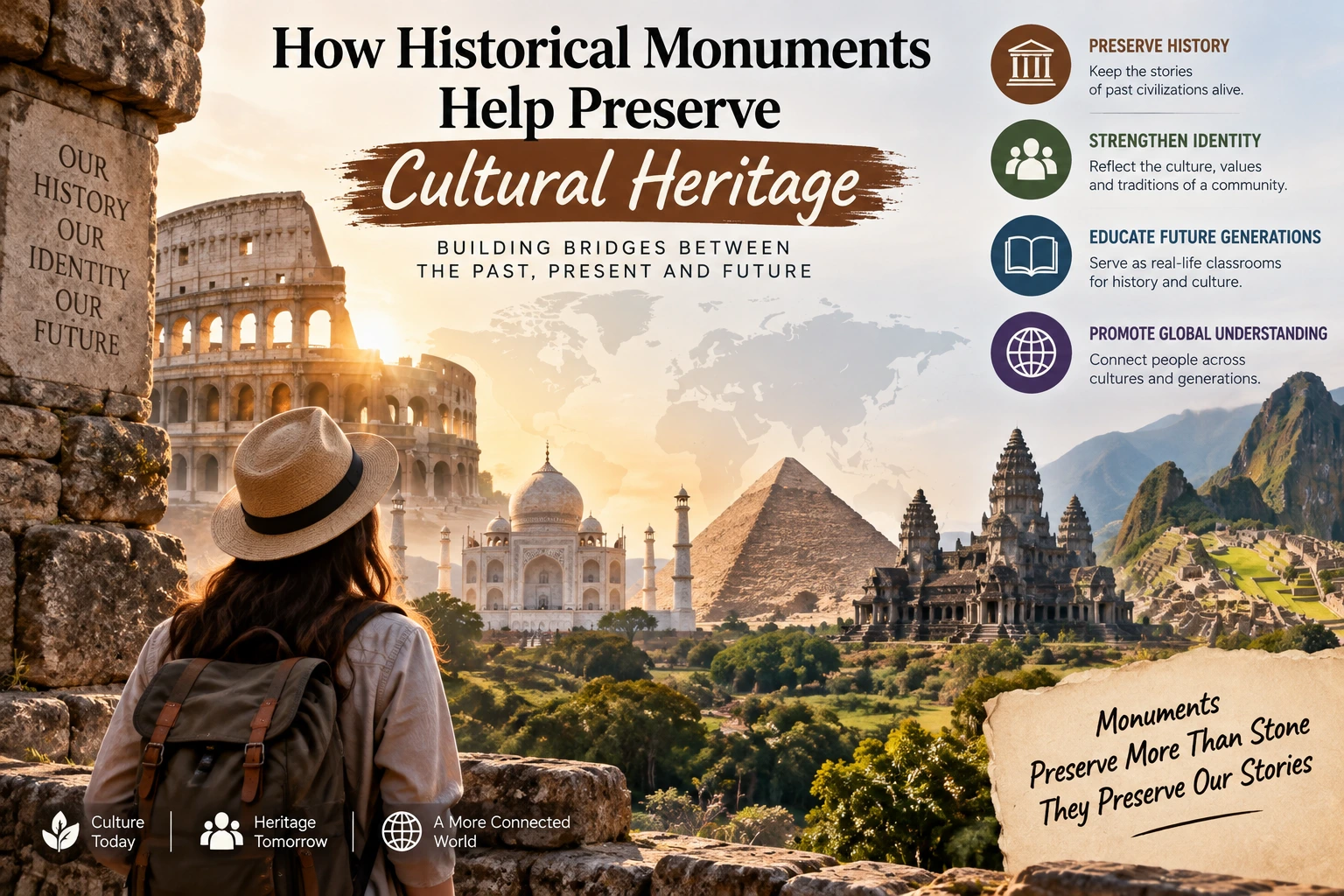
Historical monuments are more than old buildings, structures, or landmarks. They represent the experiences, achievements, traditions, and values of communities that lived before the present generation. Temples, forts, palaces, monuments, ancient cities, memorials, and archaeological sites provide a connection between the past and the present. Protecting these places helps preserve cultural heritage and allows future generations to understand how societies developed over time.
Connecting People With the Past
Historical monuments provide a physical connection to earlier generations. Books and photographs can describe important events, but standing inside an ancient structure can provide a different understanding of history.
The design, materials, inscriptions, artwork, and location of a monument can reveal information about the people who built and used it. Visitors can learn about their traditions, skills, beliefs, lifestyles, and relationships with other communities.
Preserving Architectural Knowledge
Ancient and historic structures often demonstrate construction techniques that reflect the technology and resources available during a particular period. Stone carving, traditional masonry, decorative patterns, arches, domes, pillars, and other architectural features can provide valuable information about historical craftsmanship.
Preserving these structures helps researchers, architects, students, and craftspeople understand traditional methods. Some techniques may also inspire contemporary architectural designs while encouraging greater appreciation for skilled craftsmanship.
Protecting Cultural Identity
Cultural heritage contributes to a community’s identity. Historical monuments can represent stories and traditions that have been passed from one generation to another.
When communities protect important landmarks, they help maintain a sense of connection with their history. This can be particularly meaningful when rapid urban development and changing lifestyles begin to transform traditional environments.
Supporting Education
Monuments can serve as outdoor classrooms where people can experience history directly. Students visiting historical sites can learn about architecture, politics, religion, trade, art, technology, and social life in a practical setting.
Museums and heritage organizations can also use monuments to organize educational programs, exhibitions, guided tours, and workshops. These experiences can make historical subjects more engaging and memorable.
Preserving Art and Craftsmanship
Many historic monuments contain sculptures, paintings, carvings, inscriptions, mosaics, textiles, and other forms of artistic expression. These elements provide insight into the creative traditions of earlier societies.
Conservation work can help protect such artwork from weather, pollution, neglect, and physical damage. Preserving these artistic details ensures that future generations can study and appreciate traditional forms of creativity.
Encouraging Tourism
Well-preserved historical monuments can attract domestic and international visitors. Heritage tourism can generate revenue for local communities through accommodation, restaurants, transportation, guides, handicrafts, and other services.
Tourism can therefore create an economic reason to protect historical places. However, visitor activity needs to be managed carefully because excessive crowds, litter, physical contact, and uncontrolled development can damage fragile sites.
Supporting Local Communities
Heritage preservation can provide opportunities for residents. Communities may participate as tour guides, artisans, cultural performers, hospitality providers, or conservation workers.
When local people benefit from heritage tourism and preservation programs, they may have stronger incentives to protect nearby historical sites. Community involvement can also help ensure that conservation respects local traditions and knowledge.
Preserving Historical Stories
A monument often represents more than its physical structure. It may be associated with important events, leaders, communities, migrations, conflicts, artistic movements, or social changes.
Preservation provides an opportunity to document these stories and present them responsibly. Understanding multiple perspectives can help people develop a more complete view of history rather than relying on a single interpretation.
Protecting Heritage From Modern Pressures
Urban expansion, pollution, climate conditions, natural disasters, and neglect can threaten historical structures. Conservation requires regular maintenance, scientific research, careful restoration, and appropriate visitor management.
Modern technology can support these efforts through digital mapping, three-dimensional documentation, remote monitoring, and improved conservation techniques. These tools can help document monuments and help experts identify structural or environmental problems.
Passing Heritage to Future Generations
The true value of cultural preservation becomes clear when considering future generations. A monument that survives today can continue teaching people about the past decades or centuries from now.
Preservation does not mean keeping every structure unchanged forever. Responsible conservation involves maintaining historical character while addressing safety, environmental conditions, and practical needs. Finding this balance can help monuments remain meaningful and accessible.
Conclusion
Historical monuments play an important role in preserving cultural heritage. They connect people with the past, protect architectural and artistic knowledge, support education, strengthen cultural identity, and create opportunities for responsible tourism. Their value extends beyond their physical appearance because they contain stories and knowledge that cannot easily be replaced. By combining conservation efforts with community participation and thoughtful tourism management, societies can ensure important historical landmarks continue to inspire and educate future generations.