

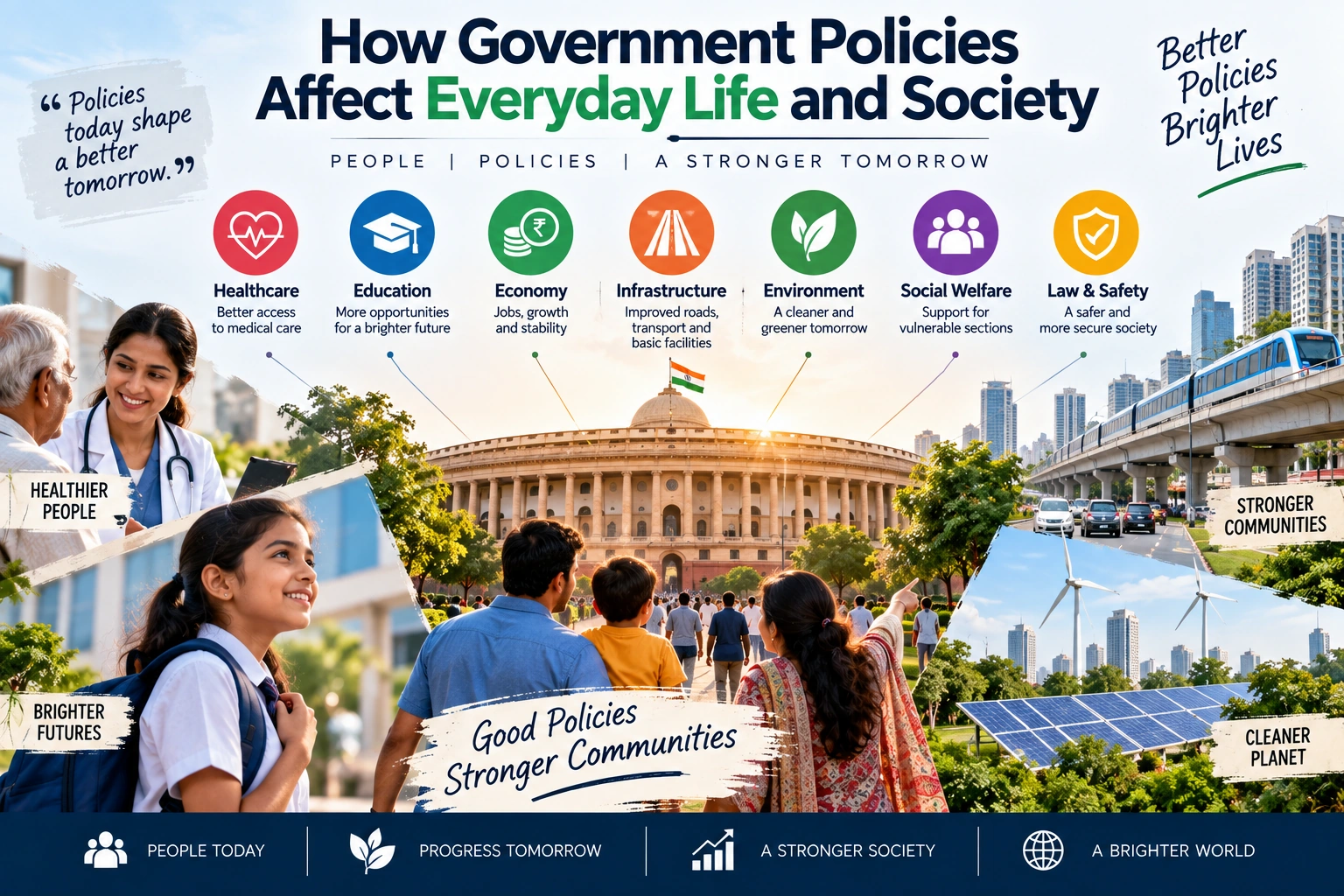
Government policies influence many aspects of everyday life, even when people do not always notice them. Decisions made by governments can affect education, healthcare, transportation, employment, taxation, public safety, housing, environmental protection, and access to essential services. Policies establish rules and priorities that shape how individuals, businesses, and communities operate.
Influencing Education
Education policy can determine how schools and universities are funded, what students learn, how teachers are trained, and how educational opportunities are distributed.
Government decisions can influence access to primary education, vocational training, scholarships, higher education, and skill-development programs. Strong education systems can help individuals develop knowledge and skills that support employment and economic participation.
Shaping Healthcare Access
Healthcare policies can influence how medical services are organized, funded, regulated, and delivered. Governments may establish programs that improve access to healthcare, regulate healthcare providers, support public health initiatives, or provide assistance to specific groups.
Policies involving vaccination programs, disease prevention, sanitation, nutrition, and health education can also affect communities beyond individual medical treatment.
Affecting Employment and Workers
Government policies can influence working conditions through labor laws and employment regulations. Rules concerning wages, workplace safety, working hours, leave, social security, and employee protections can affect millions of workers.
Employment policies can also influence job creation, professional training, and support for businesses. These decisions can affect both workers seeking opportunities and employers managing their organizations.
Influencing Taxes and Household Finances
Tax policies have a direct relationship with personal and business finances. Governments collect taxes to fund public services and infrastructure.
Changes in income taxes, consumption taxes, property taxes, business taxes, or other charges can influence household budgets and spending decisions. Tax policies may also be designed to encourage particular activities, such as investment, savings, or environmentally responsible behavior.
Improving Transportation and Infrastructure
Government investment in roads, railways, public transportation, airports, bridges, water systems, and digital infrastructure can significantly influence daily life.
Reliable infrastructure can make commuting easier, improve connections between communities, reduce transportation difficulties, and support business activity. Infrastructure planning can also influence how cities expand and how residential areas connect with workplaces and services.
Protecting the Environment
Environmental policies influence how governments, businesses, and individuals use natural resources. Regulations can address air pollution, water quality, waste management, energy use, forests, wildlife, and industrial emissions.
Environmental policies can have direct effects on everyday life by influencing the quality of air and water, the availability of public green spaces, and the long-term sustainability of natural resources.
Supporting Public Safety
Government policies also play a major role in public safety. Laws and regulations establish standards related to roads, buildings, food safety, consumer products, workplaces, and emergency services.
Police, fire departments, disaster-management agencies, and other public institutions operate within frameworks established through government decisions. Effective policies can help communities prepare for emergencies and respond to risks.
Influencing Businesses and Consumers
Businesses operate within legal and regulatory systems established by governments. Policies involving taxation, licensing, competition, consumer protection, trade, employment, and data privacy can influence how companies operate.
Consumer protection policies can help establish standards for product safety, advertising, contracts, and financial services. Such rules can give consumers clearer rights and avenues for resolving certain disputes.
Affecting Housing and Urban Development
Housing policies can influence construction, zoning, property development, rental markets, and access to housing programs. Local governments may also determine how neighborhoods develop through planning regulations and infrastructure decisions.
Well-designed urban policies can support organized growth, transportation access, public spaces, and essential services. Poor planning can contribute to congestion, inadequate infrastructure, or uneven development.
Shaping Social Opportunities
Government policies can influence opportunities available to different sections of society. Programs related to education, employment, social security, disability support, poverty reduction, and community development can affect people’s ability to participate in economic and social life.
Why Public Participation Matters
Government policies affect society most effectively when people understand and participate in civic processes. Voting, public consultations, community discussions, lawful advocacy, and staying informed can give citizens opportunities to express their concerns and evaluate policy decisions.
Conclusion
Government policies have a broad influence on everyday life and society. They shape education, healthcare, employment, taxation, transportation, environmental protection, public safety, housing, and business activity. While individual policies can produce different benefits and challenges, effective governance requires careful planning, transparent decision-making, and consideration of long-term social consequences. Understanding how policies affect daily life can help citizens become more informed participants in their communities and better understand the forces shaping society.